Australia produces world-class medical research. But turning a discovery into a therapy, medical device or investable company requires more than strong science.
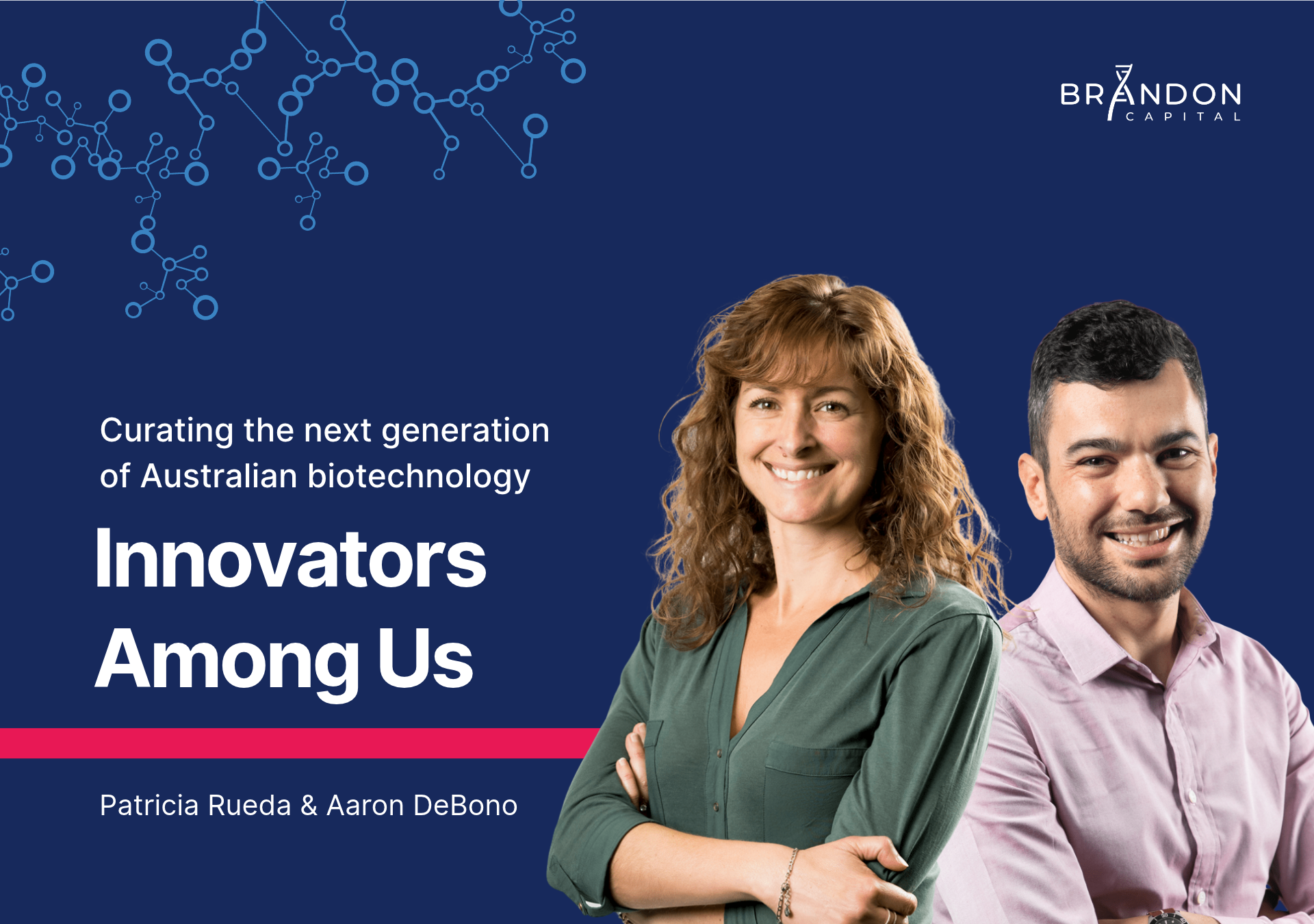
For CUREator Program Managers Patricia Rueda and Aaron DeBono, that translation gap is where their work begins. Drawing on backgrounds spanning laboratory research, commercialisation and business development, they help early-stage teams turn promising ideas into commercially compelling opportunities.
Patricia began her career in research, completing her PhD in Spain before undertaking postdoctoral work at the Institut Pasteur in Paris.
Working across different scientific cultures gave her a strong technical foundation and an international, multidisciplinary perspective. It also prompted her to think more deeply about what happens after a discovery is made.
“I could see that generating excellent science was only one part of the journey,” Patricia says. “Turning that science into something that could ultimately reach patients required a completely different set of capabilities.”
That curiosity led her from research into project and corporate development, and ultimately to supporting early-stage biotechnology companies through CUREator.
Aaron’s path began in medicinal chemistry. His PhD, undertaken in collaboration with GSK Australia, contributed to an approach that became an industry-standard methodology. He later worked as a translational medicinal chemist, while his involvement in start-ups outside the laboratory strengthened his commercial and entrepreneurial thinking.
Moving into commercialisation allowed him to bring those two perspectives together: understanding the science and recognising what it takes to turn promising research into something that can deliver real-world impact.
When assessing emerging opportunities, Aaron’s approach is simple: start with the end in mind and work backwards.
The strongest innovations address a genuine unmet need. They have a clearly understood end user, a differentiated position, defensible intellectual property and a team that understands both its capabilities and its gaps.
“A great team can turn a mediocre idea into a class-leading technology, while a dysfunctional team can compromise even the most exceptional idea,” he says.
Through CUREator, Patricia and Aaron work with researchers and founders to ask these questions early, shape practical development pathways and identify the evidence needed to progress.
CUREator combines non-dilutive funding with commercialisation expertise, networks and disciplined, milestone-led development. This support helps teams de-risk their technologies and move from interesting research findings towards potential products and investable biotechnology companies.
For Patricia, one of the most encouraging changes is that more Australian researchers now see commercialisation as a pathway to impact, rather than something separate from academic research.
Aaron sees the same shift. Stronger translational funding, university seed capital and a more active venture ecosystem are giving Australian discoveries a better chance of being developed locally.
Together, these changes are helping build a diverse CUREator portfolio across therapeutics, diagnostics, medical devices and digital health and strengthening Australia’s capacity to create globally competitive life sciences companies around its own science.